Boost in solar installation requires up to 500 additional qualified electricians per year, research finds

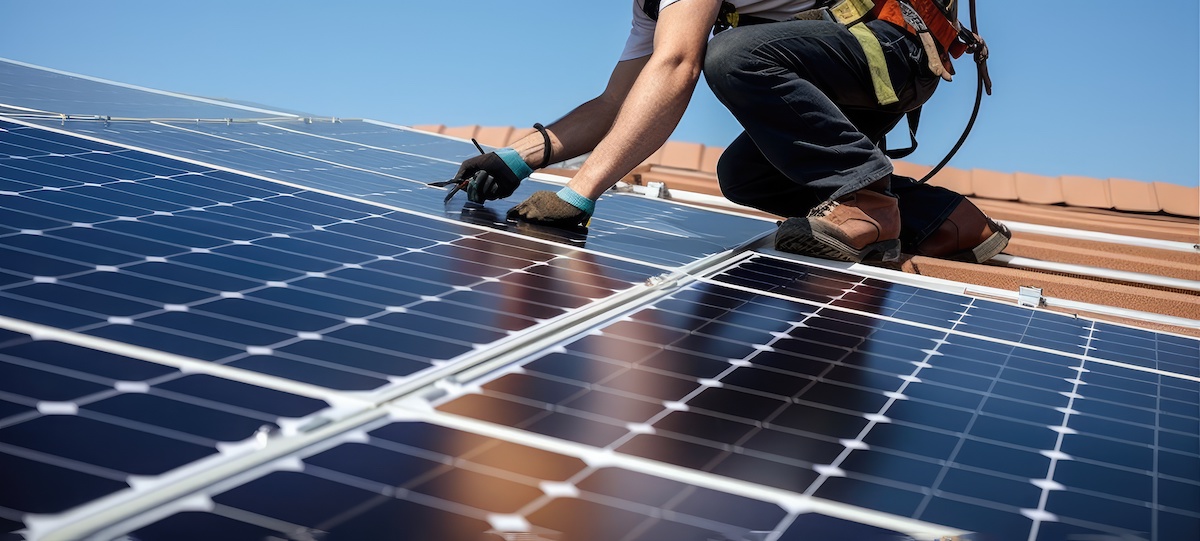
Latest research into solar PV workforce requirements concludes that up to 500 newly qualified electricians per year might be needed to support Government plans for 70GW of solar capacity by 2035.

With the UK standing at a current solar capacity of around 15GW, the research was commissioned by TESP and funded by NET to explore the electrotechnical industry’s capability to help fulfil this growth and the projected resource needed. Research experts Pye Tait carried out wide-ranging investigations, interviews with electrical contractors and in-depth analysis to arrive at the findings, which included looking at how long the average solar PV installation takes and the level of maintenance required.

It’s estimated that from now until 2035, a total workforce of between 6,110 and 6,890 full-time equivalent (FTE) qualified electricians will be required to support increased solar installations. This represents 4,800 to 5,600 more than the current FTE requirement for solar PV, or an extra 438 to 509 FTE electricians qualifying each year.

Although challenging, the electrotechnical industry has a good starting point from which to resource this need. The report estimates the UK’s current population of electricians and electrical fitters at 210,000 (excluding apprentices). Last year saw around 4,000 apprentices becoming qualified electricians, whilst apprentice start figures across the UK have been significantly higher than average in both of the last two years. In their report, Pye Tait also acknowledged that ongoing improvements to solar PV technology could result in fewer PV units being needed, and therefore a reduction in the number of electricians required.

Incorporation of solar PV knowledge and skills into electrical apprenticeship standards means that new apprentices are now becoming exposed to these and other low carbon technologies at a much earlier stage. For the existing workforce, earlier this year TESP launched the ‘Electrician Plus‘ concept, which highlights how, to ensure public safety, solar PV and other low carbon installations should only be carried out by qualified electricians who have upskilled in the relevant technologies.

With their broad foundation of occupational competence, electricians are well placed to provide the flexibility and responsiveness needed to adapt to changing technologies and variable work pipelines.

TESP believes the industry should continue to push forward with apprentice recruitment and upskilling of qualified electricians, as solar PV is not the only increasing demand on the industry’s workforce.

“Whilst the initial projections seem within our reach, it’s important to highlight the expanding need for electricians elsewhere across the industry to meet future needs,” said TESP Chair Ruth Devine. “The impact of growth areas such as smart-homes, electrification of heat, electric vehicle charging point and battery storage systems, to name just a few, means we need a constant and increasing supply of qualified and qualifying electricians.

“We urge employers to take advantage of these opportunities and ensure they recruit and train to avoid future skills gaps and ensure electricians are keeping competence and ultimately public safety at the forefront of low carbon technology installation.”

This latest piece of research builds upon a study commissioned last year also by TESP, which found that the projected demand for electrical vehicle charging point installation (with the high-end estimate at circa 5000 electricians by 2030) can be readily accommodated by the industry.

TESP is currently working on a number of projects and initiatives to support employers and electricians to upskill. These include engaging with Local Skills Improvement Plans and devolved authorities to secure funding and prioritise upskilling in key technologies for qualified electricians, and looking at alternative training routes such as full-time courses, T-Levels and NVQs and how the industry can support more learners with work opportunities to help them become properly qualified.

On the our LMI page you can read more on the solar PV report and all other research commissioned by TESP.


TESP Chair named IfATE Apprenticeship Development Partner of the Year

We’re proud to announce that TESP chair Ruth Devine of SJD Associates Ltd has been named the IfATE Apprenticeship Development Partner of the Year at the recent national Apprenticeship Awards 2023.

The award was  introduced as a first for this year to recognise employers who have gone the extra mile to develop, approve, review and revise apprenticeships in partnership with IfATE (Institute for Apprenticeships and Technical Education).

Ruth has contributed to the approval of 99 apprenticeship standards, three T Levels and 20 Higher Technical Qualifications, and also helped develop IfATE’s equity, diversity, and inclusion (EDI) framework.

‘Electrician Plus’ concept launched by TESP

The new brand concept ‘Electrician Plus’ has been launched by TESP this week to highlight how the role of a qualified electrician is central to the installation of low carbon and renewable technologies.

Adequate understanding of electrical scientific theory and principles and demonstrable occupational competence are critical for the safe installation of technologies such as solar photovoltaic (PV) panels, battery storage systems and electric vehicle charging points (EVCP). The core competence of a qualified electrician is the foundation from which to upskill and train in these areas.

The Electrician Plus model highlights how once someone reaches qualified electrician status, all that is needed is top-up CPD and qualifications in specific new technologies, to enable safe, compliant and competent installations.

Awarding bodies such as City & Guilds, EAL and BPEC have been leading the way in this area with their updated EVCP and solar qualifications, designed so that only electricians who meet the industry Level 3 standard can enrol on these courses, helping safeguard against non-qualified and under-qualified personnel undertaking renewable installations and the potential safety and fire risk this poses.

The new Electrician Plus logo will be used to endorse relevant qualifications to show they are industry approved in terms of content and assessment, providing robust upskilling for qualified electricians who have a solid foundation of electrical skills and knowledge.

“The boom of low carbon technologies has led to some misinformed claims that a whole new set of narrow occupations are needed around low carbon technology installation – this is simply not the case,” said Ruth Devine, Chair of TESP. “A significant proportion of activity is firmly within the skills remit of qualified members of the existing workforce; electricians are leading the way in this area.”

“The Electrician Plus model highlights that, once armed with core electrical competence, CPD and additional qualifications can be undertaken in a variety of low carbon technologies, helping electricians and electrical contractors bring added value to their business and customers.

“Working with industry and awarding bodies we want to ensure that installations are carried out competently and are safe, high-quality and effective. Look out for the Electrician Plus badge to be sure the qualification is industry-recognised and approved.”

New Domestic Electrician Experienced Worker Assessment now available

Domestic electricians who need to formally recognise their skills and experience now have a dedicated Experienced Worker Assessment (EWA) route available to them.

The Domestic Electrician EWA is based on the same content as the Domestic Electrician apprenticeship standard, so both new entrants and existing workers are assessed and accredited to the same industry standard.

To be eligible for the assessment, candidates need to be currently working as a domestic electrician with over 3 years’ experience. They must also hold at least a Level 2 electrical technical qualification listed in the EWA ‘Skills Scan’, a document that has to be completed during the application process for training providers to verify if the candidate has the relevant skills and knowledge to successfully complete the process.

Once enrolled on the EWA, learners will have to achieve the Domestic Electrician Experienced Worker Qualification, which comprises five practical performance units, plus the BS 7671:2018 and full Inspection & Testing qualification. A key benefit of the EWA is that existing qualifications can count towards the assessment and do not need to be repeated.

After the qualification is gained, learners must undertake the AM2ED assessment, which mirrors the AM2D End Point Assessment taken by Domestic Electrician apprentices at the end of their training.

The Domestic Electrician Experienced Worker Assessment follows in the footsteps of the EWA for Installation & Maintenance Electricians that was launched in 2020. Both EWAs were developed by an industry group comprising The Electrotechnical Skills Partnership (TESP), Certsure, ECA, ECS, NAPIT, City and Guilds, EAL, the IET and Unite. It will be recognised in the Electrotechnical Assessment Specification as equivalent to the Domestic Electrician apprenticeship. Achievement of the qualification, along with the AM2ED assessment, meets the qualification criteria for an ECS Domestic Electrician gold card application.

Ruth Devine, TESP Chair, said: “We’d like to thank the whole industry working group for the development of this new EWA. It’s an important step in recognising the work of domestic electricians and providing a robust route for competence which is a recognised benchmark against the Domestic Electrician apprenticeship standard. We hope to see many follow this route and become formally accredited to continue the industry efforts to raise standards by upskilling the workforce.”

The EWA is available in England, Wales and Northern Ireland from accredited EAL training centres this month (July) and later in the year from City & Guilds centres.

To find out more visit www.electrical-ewa.org.uk